In this chapter, we will learn about fundamental types of solar power plants. For any solar engineer, it is very important to understand the working, advantages, limitations, and applications of different types of solar power plants.
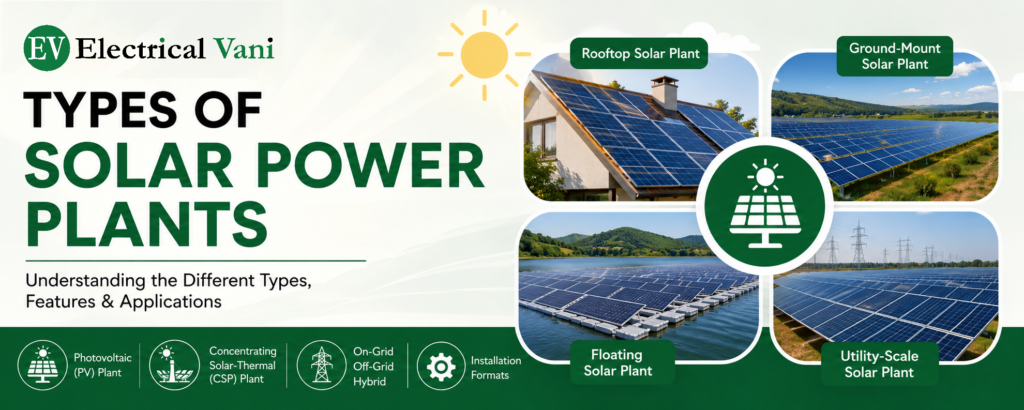
What is a Solar Power Plant?
A solar power plant is an arrangement that converts sunlight into electricity.
It makes use of solar photovoltaic (PV) modules to generate direct current (DC) electricity. This DC electricity is then converted into alternating current (AC) electricity with the help of solar inverters for utilization in homes, offices, industries, etc.
Types of Solar Power Plants
The classification of solar power plants is represented in the following table –
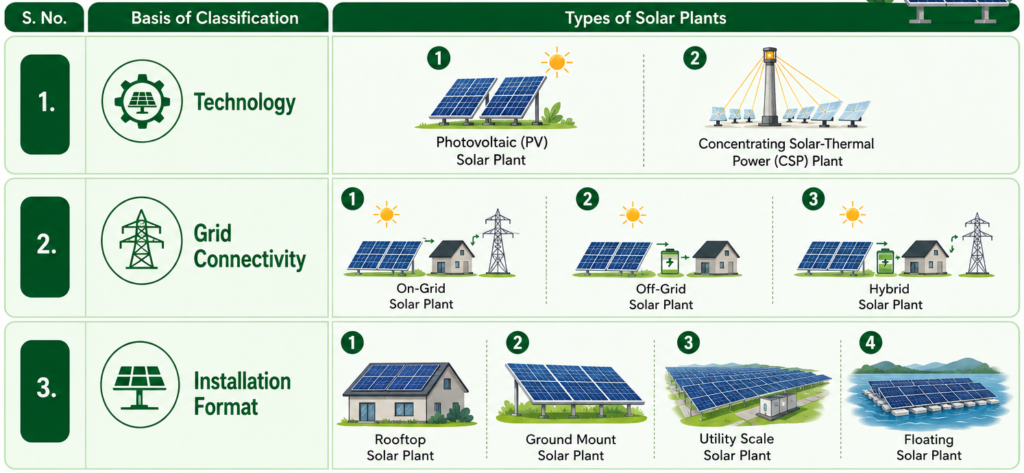
Let’s understand the features of each of these solar power plants in detail.
Photovoltaic (PV) Solar Power Plant
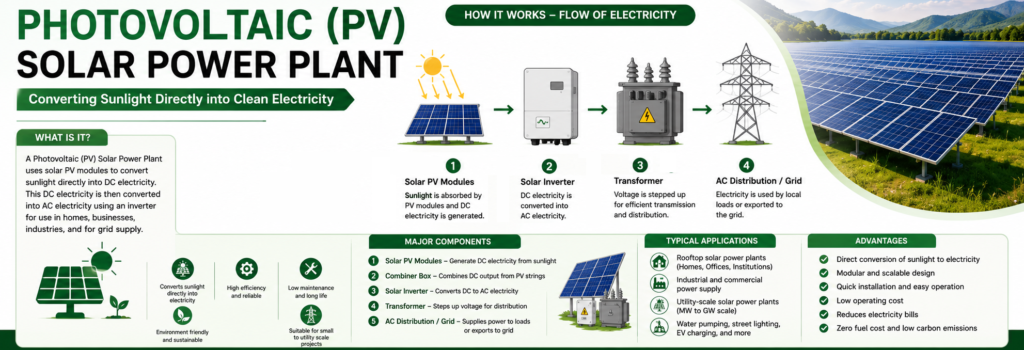
A solar power plant in which PV modules are used to convert sunlight directly into electricity is known as PV solar power plant.
This is the most common type of solar power plant used for rooftops and utility scale applications.
Concentrating Solar-Thermal Power (CSP) Plant
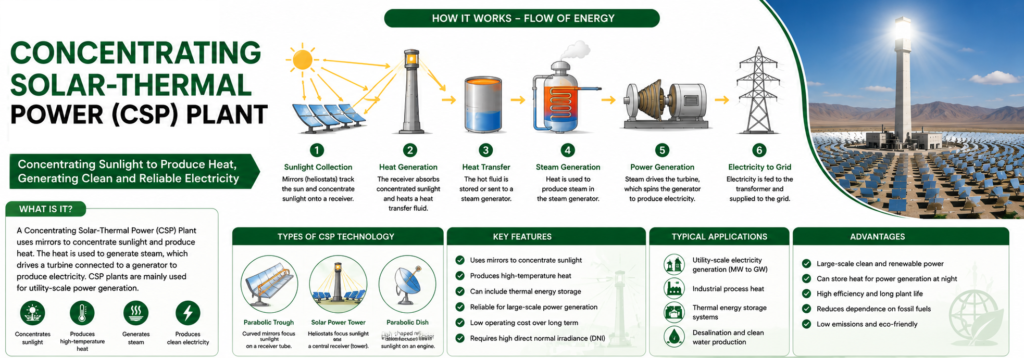
A CSP solar power plant uses mirrors to concentrate sunlight and produce heat. Which is then used to produce steam and generate electricity.
CSP power plants are mainly used in utility-scale projects.
On-Grid Solar Power Plant
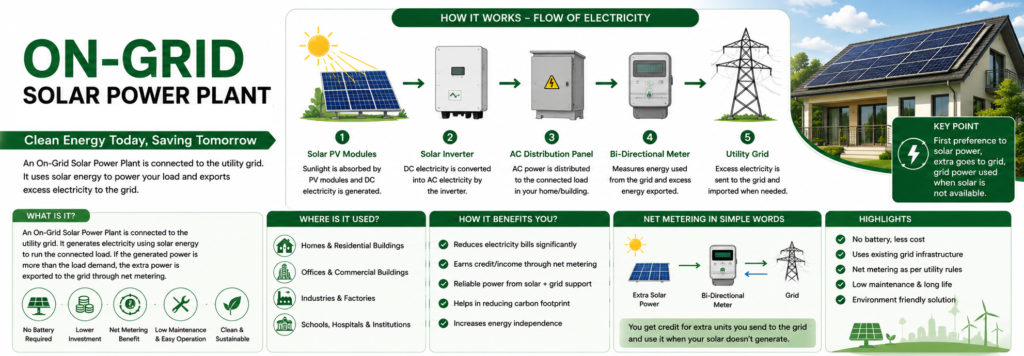
An on-grid solar power plant is directly connected to the utility grid. It is also known as grid-connected solar plant or grid-tied solar plant.
In on-grid solar power plant, first, the generated power is used to run the connected load. If the power generated is greater than the load demand, the extra power is exported to the grid.
This type of solar plant is mainly used in homes, offices, commercial buildings, industries, etc.
The following are some key features of the on-grid solar power plant –
- It does not require battery energy storage system.
- It is a low-cost solar power plant.
- It uses net metering or similar export arrangements depending on the utility rules or policies.
Off-Grid Solar Power Plant
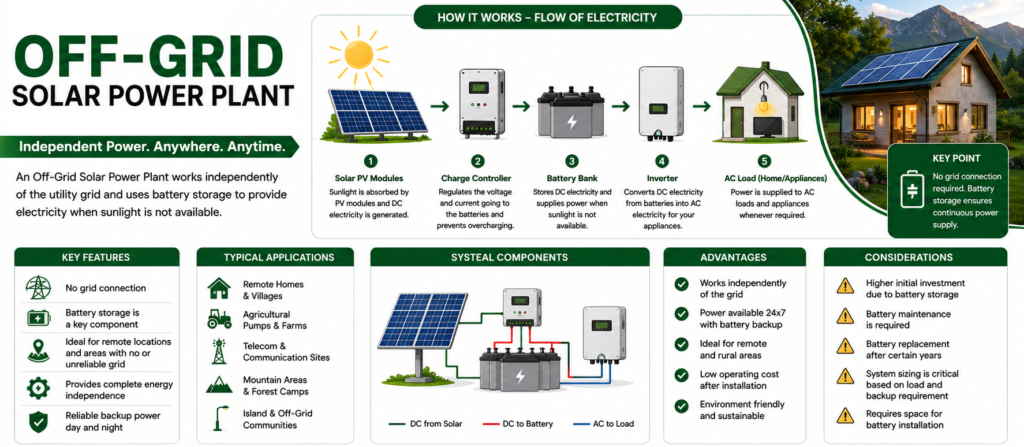
An off-grid solar power plant is one which has no connectivity with the utility grid. This type of solar power plant is generally used where grid access is not available or not reliable.
In off-grid solar plants, batteries are used to store electricity and used when sunlight is not available.
Some of the key features of off-grid solar power plants are listed here –
- They do not have grid connection.
- Battery storage is used as the key component.
- It is used in remote locations, farm loads, telecom sites, etc.
Hybrid Solar Power Plant
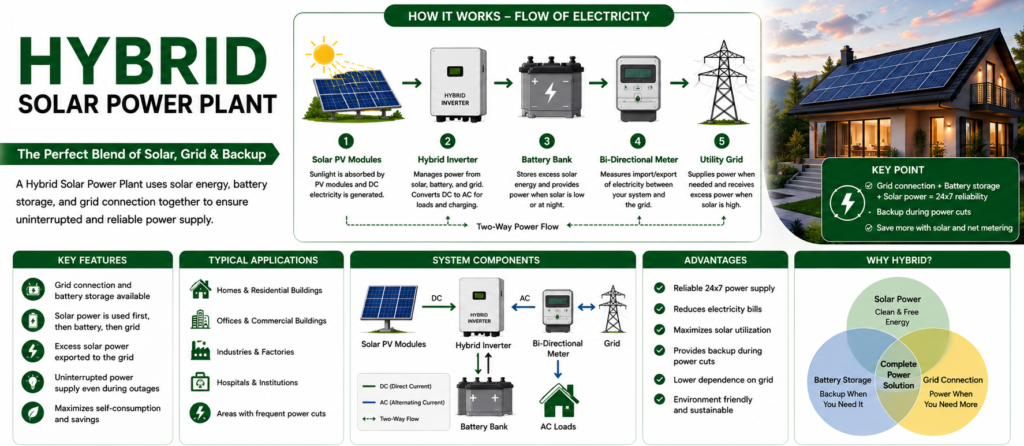
Hybrid solar plant combines the features of on-grid and off-grid solar plants. Hence, a hybrid solar plant has both grid connectivity and battery storage.
The key features of hybrid solar power plants are –
- Grid connection and battery storage available.
- Battery storage provides backup when sunlight is not available.
- It requires higher investment as storage is included.
Rooftop Solar Power Plant
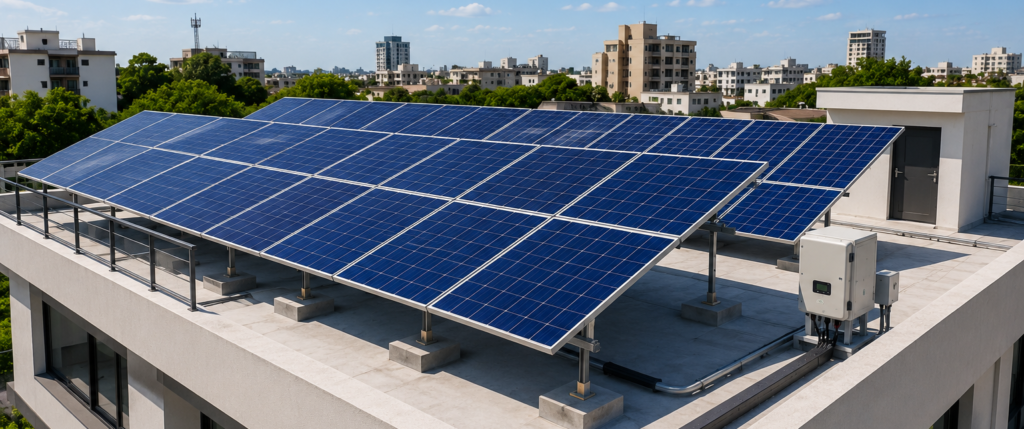
Rooftop solar power plants are built on roofs of buildings like houses, offices, factories, etc. These power plants are used to reduce electricity bills. They can be either on-grid or off-grid or hybrid in nature.
Ground-Mount Solar Power Plant
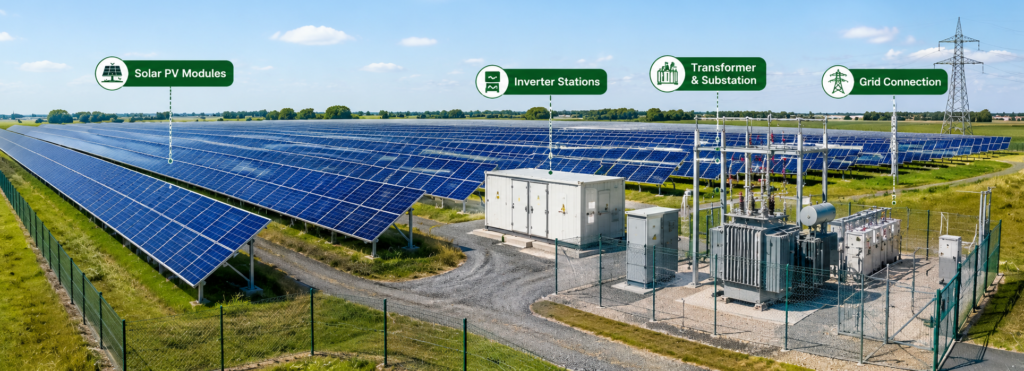
Ground-mount solar power plants are installed on land. These plants are installed for large capacities of MWs or GWs. These plants are generally installed in on-grid fashion.
Utility-Scale Solar Power Plants
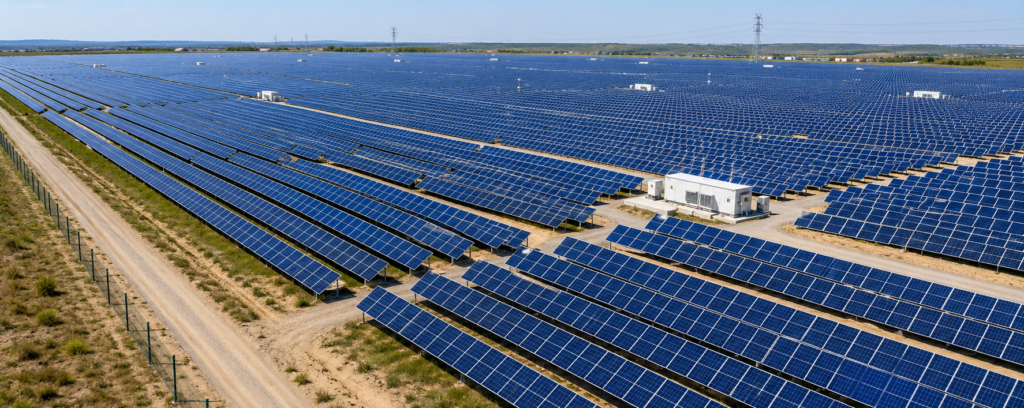
Utility-scale solar plants are installed on land and are used for large capacities. These plants are installed to provide electricity to grid like conventional power plants.
Floating Solar Power Plants
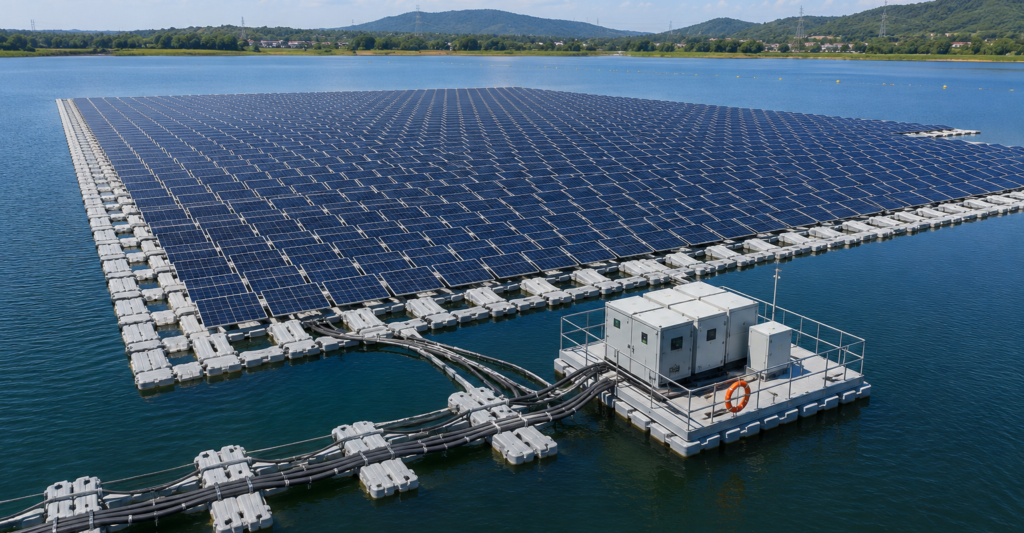
Floating solar power plants are installed on water bodies like reservoirs or lakes. These plants are also installed with grid connectivity and commercial power generation.
Selection of Right Solar Plant
The selection of right solar power plant can be done based on the following five practical questions –
1 – Is the grid connectivity available and reliable?
If the answer is Yes. Then, On-Grid Solar Plant is the simplest choice.
2 – Is the backup power required?
If the answer is Yes. Then, Hybrid or Off-Grid Solar Plant is more suitable.
3 – Is the installation site a land or roof or water surface?
4 – What is the load profile and how many units of electricity need to be generated per day?
5 – What is the investment budget?
Therefore, one can answer these five questions to select the right solar power plant.